Climate-Controlled Steel Buildings for Food Storage
Climate-controlled steel buildings help BC and Alberta farms reduce spoilage, protect harvest quality, and plan food storage with more confidence.

The Farming Karma pre-engineered steel agricultural building. Designed, installed, and supplied by Metal Structure Concepts.
Climate-controlled agricultural steel buildings are pre-engineered farm buildings designed to support regulated storage, processing, and workflow under one roof. For growers and agri-business operators across BC, Alberta, Saskatchewan, and Northern Canada, they help reduce spoilage, protect crop quality, and make better use of your space. Here's what to plan for before you build, and what MSC's farm projects show in practice.
Why Climate-Controlled Steel Buildings Work for Food Storage
Crop loss from poor storage hits product quality, revenue, and your planning for the season ahead. If the building isn't designed for the job, those costs have a way of showing up year after year.
Structural steel handles the demands of agricultural cold storage well. Large clearspan interiors mean no columns breaking up your floor plan, so coolers, processing areas, and storage zones go where your operation actually needs them. Roof systems get engineered to carry the weight of mechanical units and HVAC equipment from the start. Insulated metal panels on the roof and walls manage air, vapour, and thermal performance to Canadian building code standards. And steel holds up under sustained moisture and temperature cycling with lower long-term maintenance than many other building types.
For operations running multiple functions under one roof, interior demising walls finished with insulated panels let you zone cold storage, dry storage, processing, and staff areas separately, each holding its own environment, within a single building envelope.
That's what these buildings are designed to do when the layout, insulation, and mechanical loads are planned properly from day one.
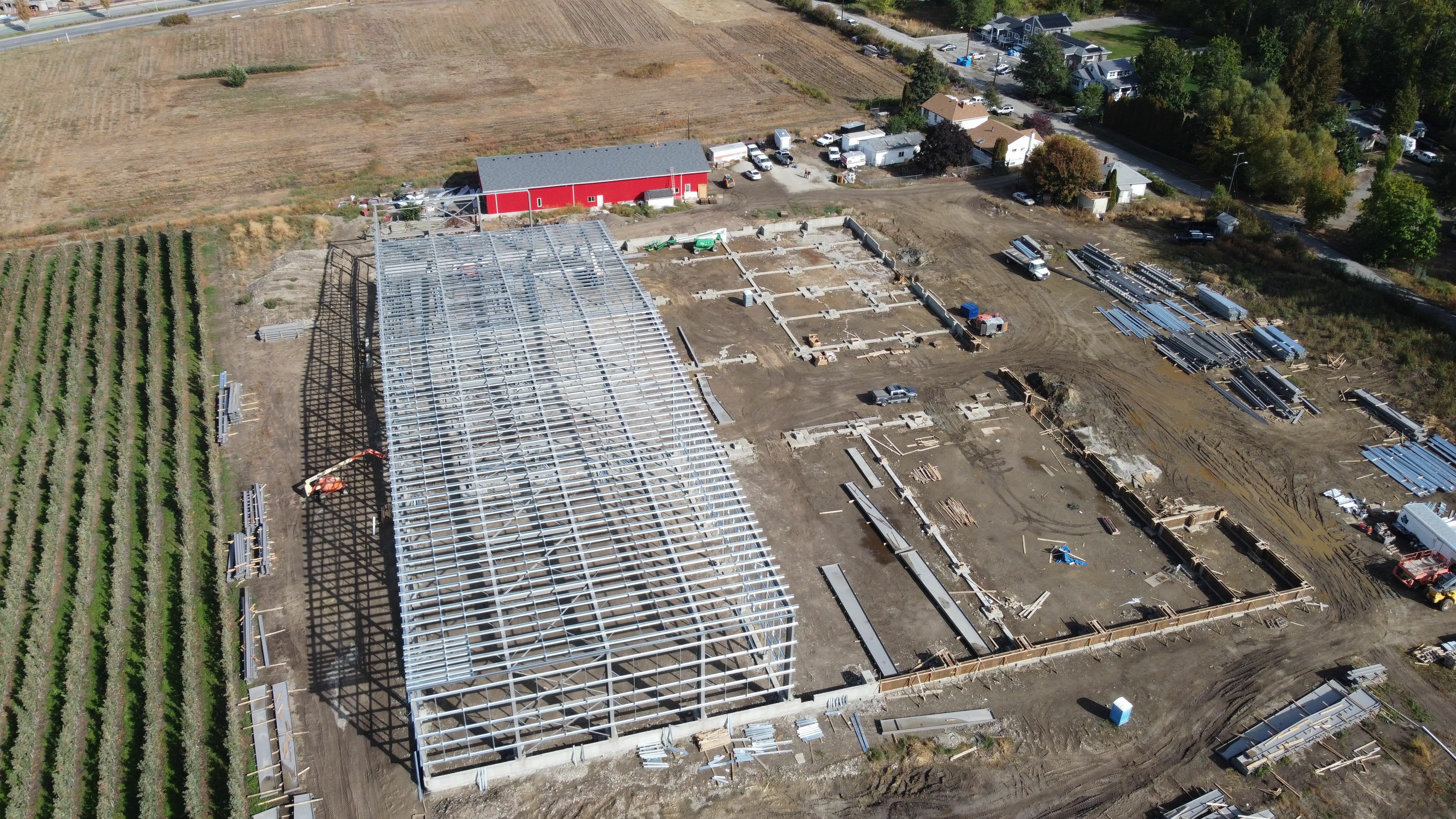
The steel frame being assembled by MSC at the Farming Karma agricultural project in Kelowna.
Inside a Steel Farm Building: the Farming Karma Project
The Farming Karma Fruit Company project in Kelowna, BC, is one of the most detailed agricultural builds MSC has completed. Farming Karma is a family-run apple and cherry orchard that also runs an agri-tourism business and craft soda production out of the same property. Their building had to work for all of it at once.
MSC delivered an 84,000 sq. ft. pre-engineered steel building with climate-controlled food storage, insulated metal panels on the roof and all exterior walls, three internal demising walls also finished with insulated panels, a 24,000 sq. ft. mezzanine, custom roof loading for coolers and mechanical units, snow stops on all eaves, and a custom deck on two exterior walls.
MSC was involved from the first planning conversation, more than 18 months before the build wrapped. That lead time is where the real work happens: insulation spec, mechanical loads, interior zoning. Getting those decisions right early is what keeps them from becoming expensive corrections later.
Metal Structure Concepts’ Agricultural Steel Buildings
MSC's farm building portfolio covers orchards, vineyards, fruit packing facilities, seed operations, and farm shops across the region, many of them for clients who've come back for a second or third build.
"We brought Metal Structure Concepts on to build the second phase of our fruit packing facility. I've already recommended them to a few people and we're looking forward to working with them again in our third phase."
— Sunny Dhaliwal, Sunny Valley Fruit
Repeat work like that reflects clear communication and delivery that actually stays on track.
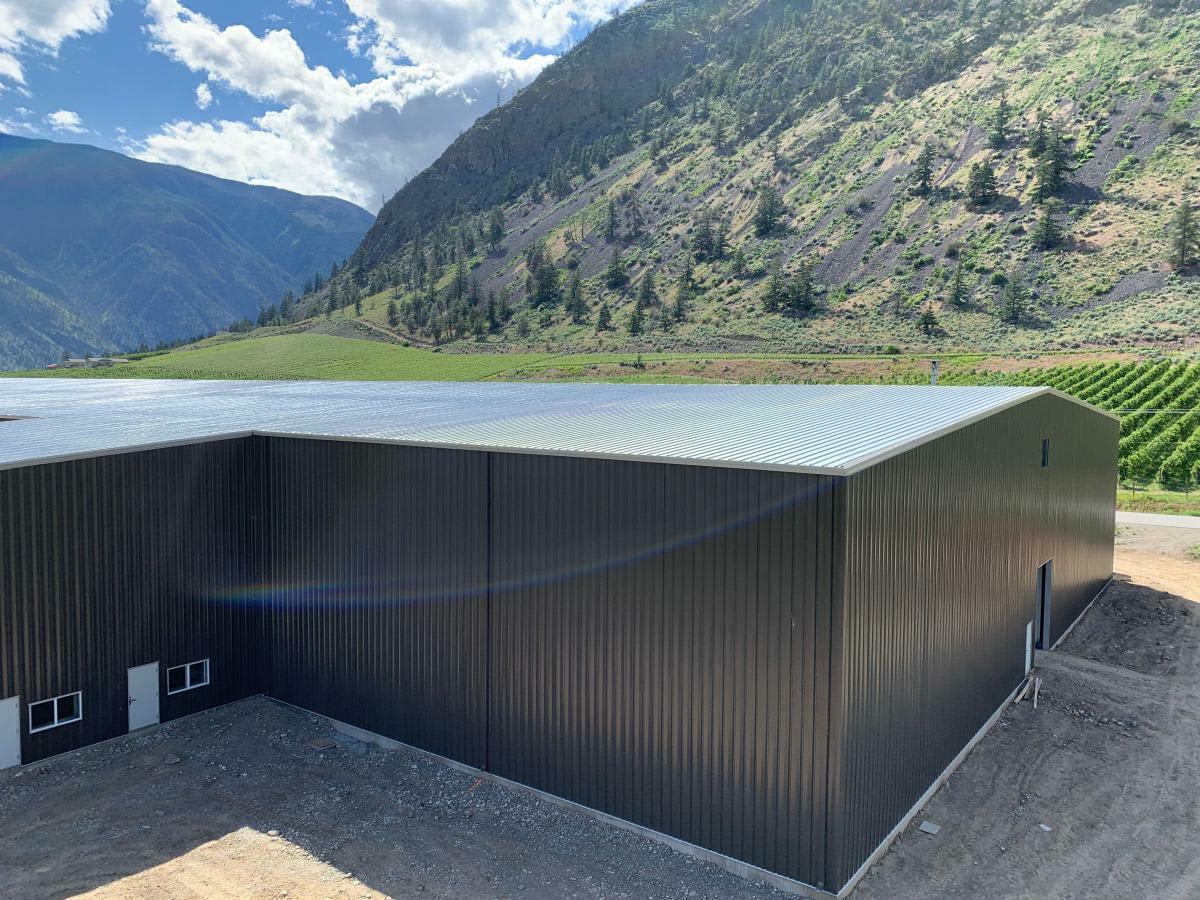
A temperature-regulated metal building for Sunny Valley Fruit, a family-run operation in Keremeos, BC.
What to Get Right Before You Build
A few decisions in the planning phase shape how a climate-controlled building performs for the life of the structure. These aren't details to sort out during construction.
-
Insulation strategy. The right spec depends on your climate zone, what you're storing, and the temperature differential you need to hold. BC's Interior and interior Alberta face different conditions, and those differences matter at the design stage. Canada's building envelope research guidance is clear that assemblies need to manage precipitation, air, heat, and vapour, with the right approach depending on climate zone and intended use. Steve Ivanitz and the MSC team bring hands-on regional experience to projects across Western and Northern Canada. MSC is led by third-generation steel builders Steve and Corey Ivanitz, and the family's steel building background spans more than 60 years. This is their home turf.
-
Mechanical load planning. Coolers and HVAC units mounted to the roof or walls need to be designed into the structure from the start. That load gets engineered in — not figured out on site.
-
Interior zoning. Think through your workflow before the layout gets locked. Where does product arrive, where does it get processed, and where does it leave? A building that's laid out around how your operation actually runs pays off every single day.
-
Permit and code compliance. Food storage buildings often carry requirements that go beyond a standard farm shop, including fire ratings and food safety considerations. Depending on your operation, CFIA preventive control requirements may apply even where a licence isn't required. If your builder isn't asking about any of this at the start of the project, that's worth noting.
Built for Western Canada, by People Who Know It
A climate-controlled agricultural steel building is only as good as the team that designs and installs it. The insulation spec that works in Kelowna isn't the same one that works in Red Deer or Fort St. John. The mechanical loads on a cherry storage facility aren't the same as those of a grain operation. Those details matter, and getting them right takes more than a spec sheet and an online quote form.
MSC has been building across Western and Northern Canada for more than 60 years. Steve and Corey Ivanitz are third-generation steel builders who grew up in this industry and have spent their careers working in the same climate zones, navigating the same code requirements, and building for the same kinds of operations their clients run. When you call MSC, you're talking directly to the people who will manage your project.
“MSC is a proudly Western Canadian, family-run company, backed by Canadian steel and trusted nationwide.”
— Corey Ivanitz, Head of MSC’s Prairie division
That's not something you get from a kit supplier. It's something that gets built one project at a time, over decades, in a region you actually know.
FAQ: Climate-Controlled and Atmosphere-Controlled Farm Buildings
Q: What's the difference between climate-controlled and atmosphere-controlled storage?
A: Climate-controlled buildings regulate temperature and humidity. Atmosphere-controlled storage goes further, managing oxygen, CO2, and nitrogen levels to slow the ripening process and extend shelf life. Steel buildings can support both, depending on the mechanical systems you install.
Q: How long does it take to build a cold storage steel building?
A: MSC's farm building crews often complete projects in less than six weeks on site. The design and engineering phase takes longer, and that's where the decisions that affect long-term performance actually get made.
Q: Does MSC build climate-controlled farm buildings outside BC?
A: Yes. MSC serves BC, Alberta, and Saskatchewan, and has built into Northern Canada. The insulation and vapour control approach gets tailored to your climate zone, which varies considerably across those regions.
Metal Structure Concepts helps Western Canadian agricultural operators plan and build pre-engineered steel buildings for storage, processing, and long-term performance. Talk to a project lead about climate-controlled steel buildings for your operation. Get a quote.